The belt debate produces more heat than light. One camp says never use a belt — you need to build raw core strength first. The other says always wear a belt — protect your spine at all costs.
Both camps are wrong because they treat the belt as a single thing with a single purpose. It is a tool. Tools have appropriate and inappropriate uses.
What a Belt Actually Does
A belt does not magically protect your spine. It gives your core something to push against.
When you brace your abdomen against a rigid surface (the belt), intra-abdominal pressure (IAP) increases. Higher IAP creates a more stable column between your ribcage and pelvis, reducing the compressive and shear forces on your lumbar spine.
The belt does not do the bracing for you. It amplifies the bracing you are already doing. A lifter who cannot brace properly does not become safe by putting on a belt — they just fail with more confidence.
When to Wear It
Heavy compound lifts near or above 85% of your max. This is the clearest use case. The spinal loads at 90%+ are high enough that every percentage point of additional IAP is meaningful. Belted squats and deadlifts at near-maximal loads have strong safety and performance justification.
Competition. If you compete equipped, train equipped at least some of the time.
Top sets when training close to failure. When the bar is heavy and your technique may break down, the belt provides a margin.
When Not to Wear It
Every single set. If you belt up for warm-ups and light technique work, you are robbing your core of the stimulus it needs to develop. The muscles that support your spine — the obliques, transverse abdominis, multifidus — adapt to the demands placed on them. If a belt always handles the demand, they do not grow.
Accessory work. Romanian deadlifts, rows, lunges — there is no reason to belt these. The loads are submaximal and the patterns are exactly where unbraced core strength should be trained.
When technique is already breaking down. A belt does not fix a squat that is caving forward. If your hinge mechanics are poor, adding a belt papers over a problem that needs to be addressed, not suppressed.
The Practical Protocol
A reasonable approach:
- Below 80% of max: No belt. Build raw bracing competency.
- 80–87%: Optional. Use it if the movement is technically demanding or fatiguing.
- 88%+: Belt recommended. The risk-reward math shifts.
Some coaches recommend training without a belt for entire off-season blocks to prioritize core development, then reintroducing it in the strength and peaking phases. This is a defensible strategy.
How to Actually Use a Belt
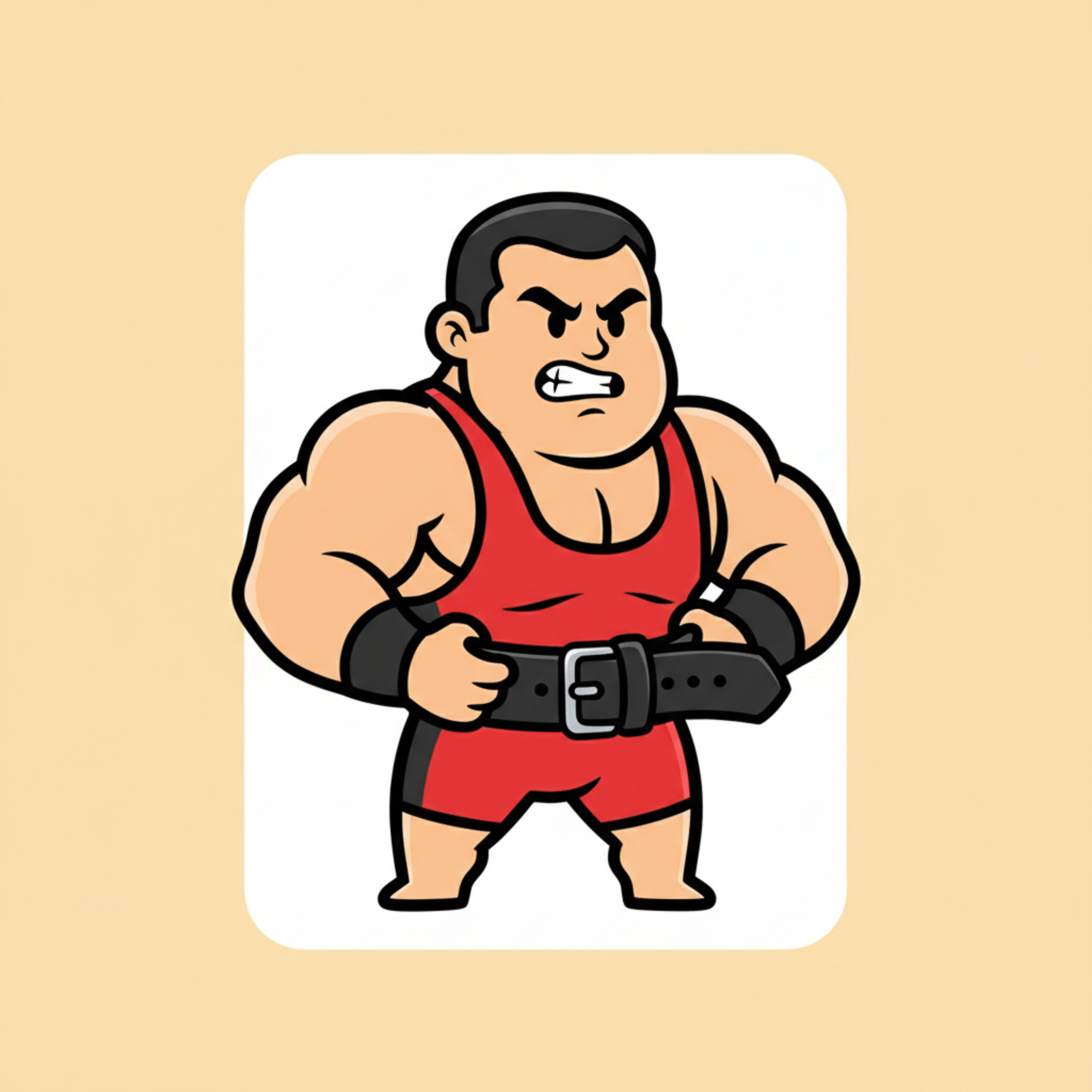
Wearing a belt is a skill. The common mistake is pulling it too tight and trying to suck in. You should be breathing into the belt — expanding your abdomen outward against the rigid surface, 360 degrees.
- Position the belt at the top of your hips, below the lower ribs.
- Tighten it until snug but not painful.
- Take a big breath into your belly (not your chest).
- Push your core outward against the belt — front, sides, and back.
- Hold that tension through the lift.
A belt worn correctly feels like a wall you are pushing against. A belt worn incorrectly is just a fashion accessory.
About Rasmus
Powerlifter and coach with more than 7 years in the game.