Speed work sounds like it's for athletes. You are a powerlifter. You lift heavy things slowly.
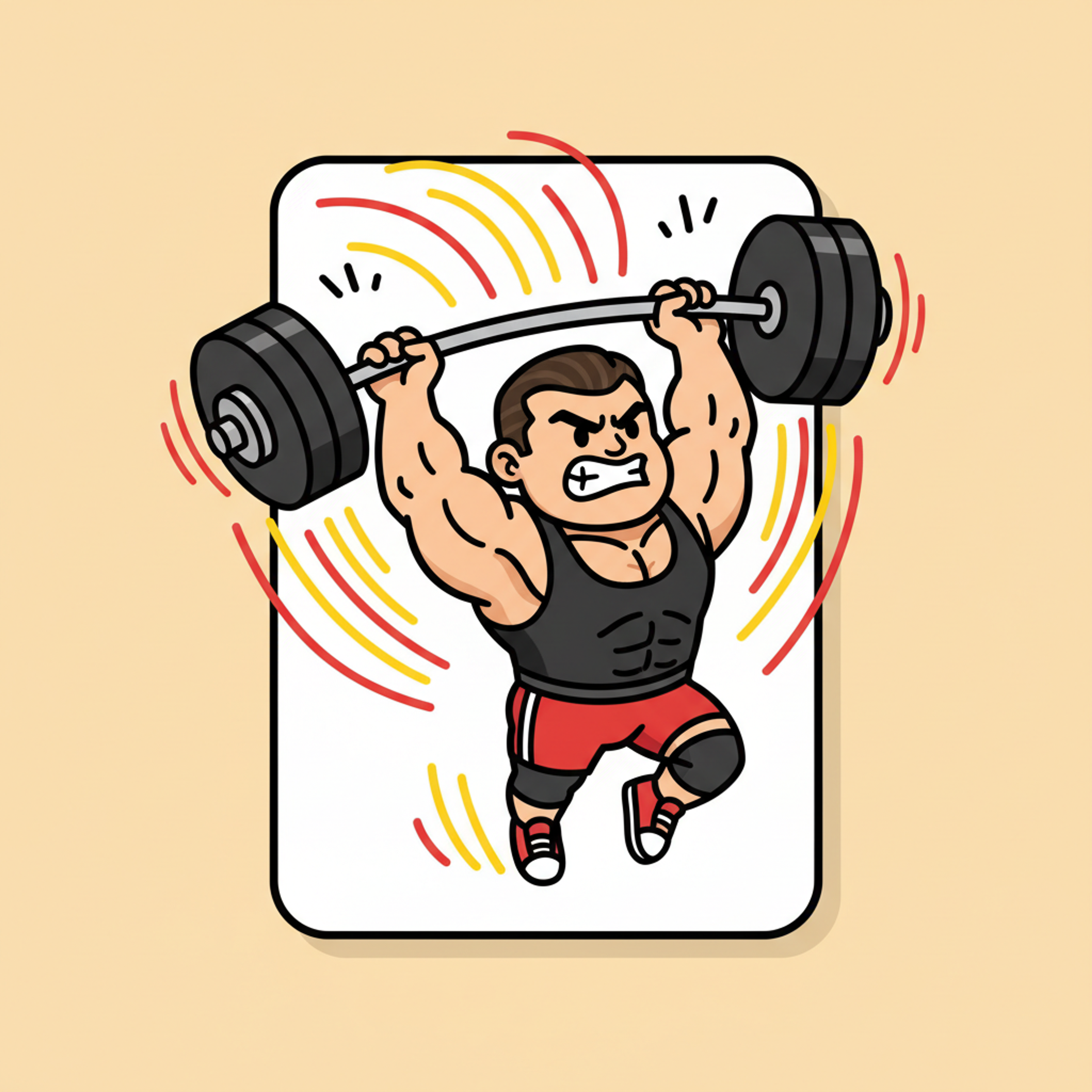
So why does Westside Barbell have you moving 60% of your max as fast as possible?
The answer is force production — and whether dynamic effort training is right for you depends almost entirely on your training age.
The Physics Argument
Force = Mass × Acceleration.
To move a heavy barbell, you need force. You can increase force by increasing mass (just load more weight) or by increasing acceleration (move whatever weight you have as fast as possible).
Speed work trains the acceleration side of the equation. The goal is to develop rate of force development (RFD) — how quickly your nervous system can fire muscle fibers and produce peak force.
At maximal loads, bar speed is already low by necessity. You cannot practice acceleration under 95% of your max. Speed work fills that gap with sub-maximal loads moved with maximal intent.
The Westside Model
The conjugate method uses two lower and two upper days per week:
- Max effort day: Work up to a max in a variation (box squat, board press, etc.)
- Dynamic effort day: Multiple sets (8–12) of 2–3 reps at 50–70% of max, moved as explosively as possible
The theory is that both ends of the strength-speed spectrum are trained concurrently rather than in sequential phases.
Who It's For
Speed work is most clearly beneficial for advanced powerlifters — specifically those whose bar speed has become a genuine limiting factor.
If your squat stalls at lockout because you do not have enough momentum coming out of the hole, speed work addresses this. If your bench stalls at mid-range because the bar is decelerating too early, speed work addresses this.
It is also used effectively by athletes in other sports — football, Olympic weightlifting, sprinting — where RFD is a primary performance variable.
Who Should Skip It (For Now)
Beginners and early intermediates do not need speed work. Here is why:
- Technique is still developing. Moving a barbell at high velocity amplifies every technical error. A slight bar path deviation that is harmless at 80% becomes a miss at 95% if trained under speed.
- Absolute strength is the bottleneck. If your squat is 140kg, the fastest way to squat more is to get stronger, not faster. Speed work takes training time away from the volume that drives strength gains.
- The intensity is deceptively low. 60% sets feel easy. Many lifters use them as a warm-up and wonder why they are not progressing.
The threshold for speed work to be worth programming is roughly when absolute strength is no longer the primary limiter — typically intermediate to advanced.
How to Add It If You Want To
If you are at the level where speed work makes sense:
- Squat: 8–10 sets of 2 reps at 55–65% 1RM. 45–60 second rest. Full reset between reps.
- Bench: 8–9 sets of 3 reps at 50–60% 1RM. Touch-and-go or paused depending on your sticking point.
- Deadlift: 6–8 singles at 60–70%. Deadlifts do not benefit as clearly from dynamic effort — the movement starts from a dead stop and speed is inherently limited by the setup.
The key: if the bar is not moving fast, you are not doing speed work. You are just doing a light set. Put intent behind every rep.
About Rasmus
Powerlifter and coach with more than 7 years in the game.