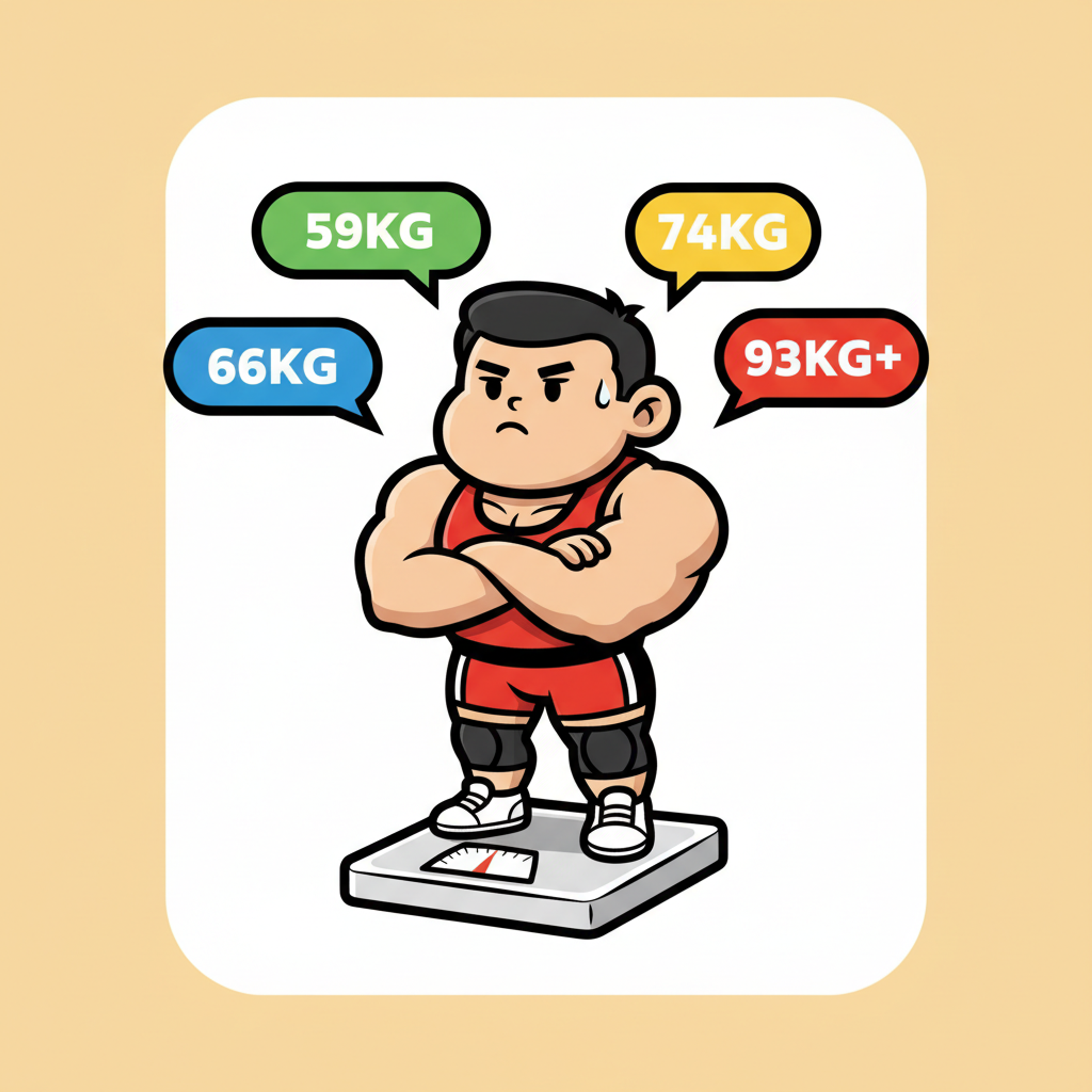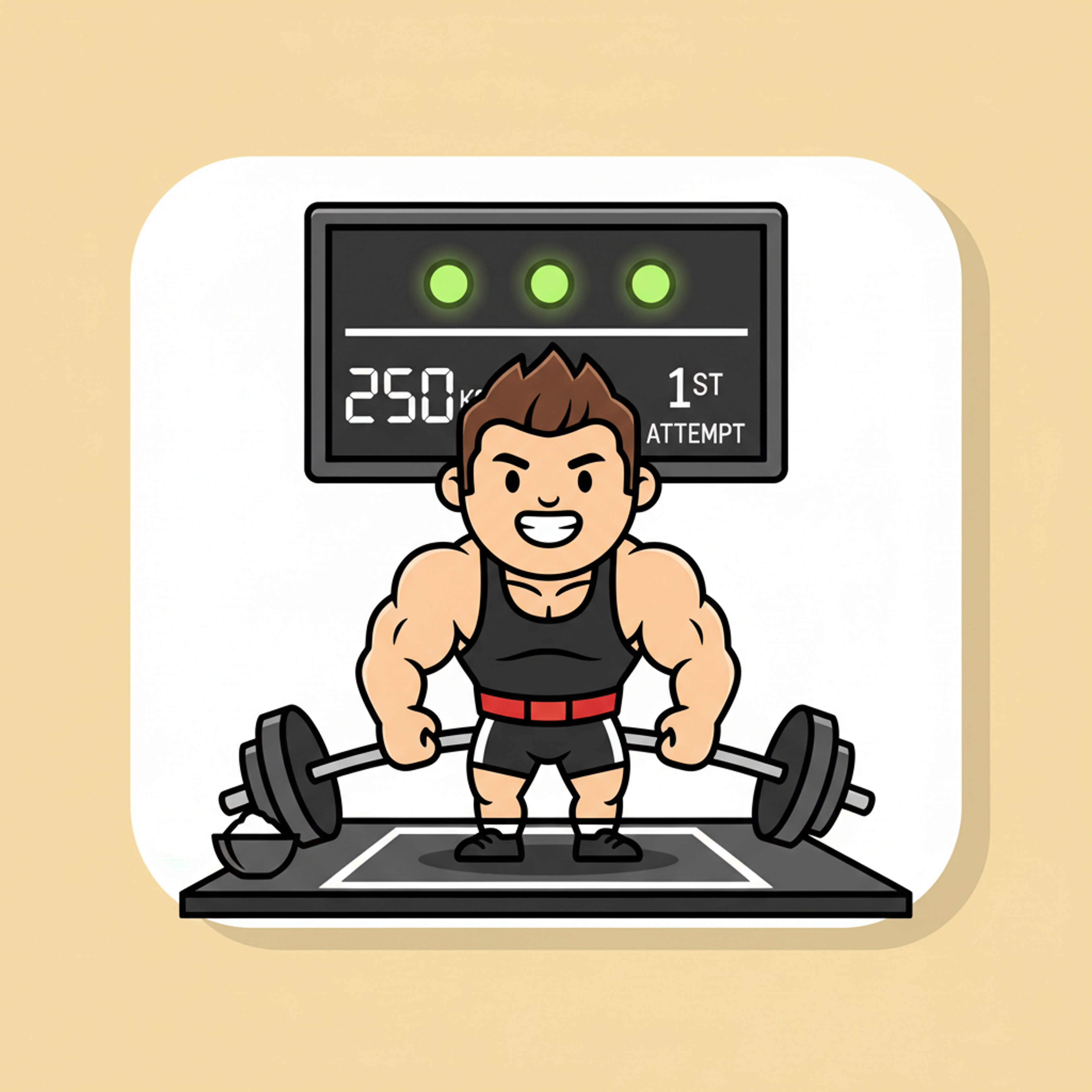
Your opener is the most important lift of the meet. Not your third attempt. Not your all-time PR. The first lift.
Miss your opener and you are chasing the meet the entire day. Make it and everything else opens up.
Most lifters go too heavy. Here is the correct framework.
The Rule
Your opener should be a weight you could lift on your worst day, half asleep, after a long drive, slightly dehydrated, in front of a crowd, wearing a singlet, with a head judge you have never met.
That is not a hypothetical. That is meet day.
The standard: 90–92% of your current training max (not your competition goal).
If you squat 200kg in the gym on a good day, your opener is 180–184kg. Not 190. Not 195. 180.
Why Everyone Goes Too Heavy
There are three psychological traps:
1. Ego math. "My gym max is 200, so I should open at 190 to show I belong here." The crowd does not care about your opener. The judges certainly do not.
2. Goal confusion. Your goal is to make three attempts and post a total. A good total comes from three white lights, not a heroic second attempt after a bombed opener.
3. Training high. If you regularly train at 90–95% in the gym without a meet structure, openers at 90% feel light in training — and lifters incorrectly assume they can push the opener up.
How Meet Fatigue Changes the Math
A competition introduces variables your gym does not have:
- Waiting. You may be on the platform at attempt 1 anywhere from 60 to 90 minutes after your last warm-up. Warm-up timing is an art.
- Adrenaline. The nervous system spike that feels like superhuman strength in warm-ups often translates to a failed setup or a depth miss.
- Equipment. Singlet, knee sleeves, belt — they feel different under load if you have not trained in them consistently.
- Judging. Commands (squat, press, rack, down) require patience. Lifters who have not practiced commands rush them.
All of these add to the effective difficulty of the lift. Your opener should absorb that margin.
Attempt Selection Strategy
Attempt | Target | Notes
Opener | 90–92% training max | Guaranteed make. Sets the tone.
Second | 97–100% training max | Your real baseline. Should be a solid PR or near.
Third | 100–105% training max | Called based on how second felt. Only push here if second was fast and clean.
Do not pre-register your third attempt. Most federations allow you to change your third attempt up to the last moment. Use that option. Decide your third based on real information, not pre-meet optimism.
The Warm-Up Window
Your last warm-up should be at roughly 90–95% of your opener. You want to be warm and primed, not fatigued.
A common mistake is pyramiding up to near-opener weights too early and then sitting for 20 minutes while other flights finish. Map out the timing. Know when your flight starts. Work backwards.
Getting your opener right is a skill. The lifters who consistently total well are usually the ones who treat their opening attempts as non-events — because they planned them that way.
About Rasmus
Powerlifter and coach with more than 7 years in the game.