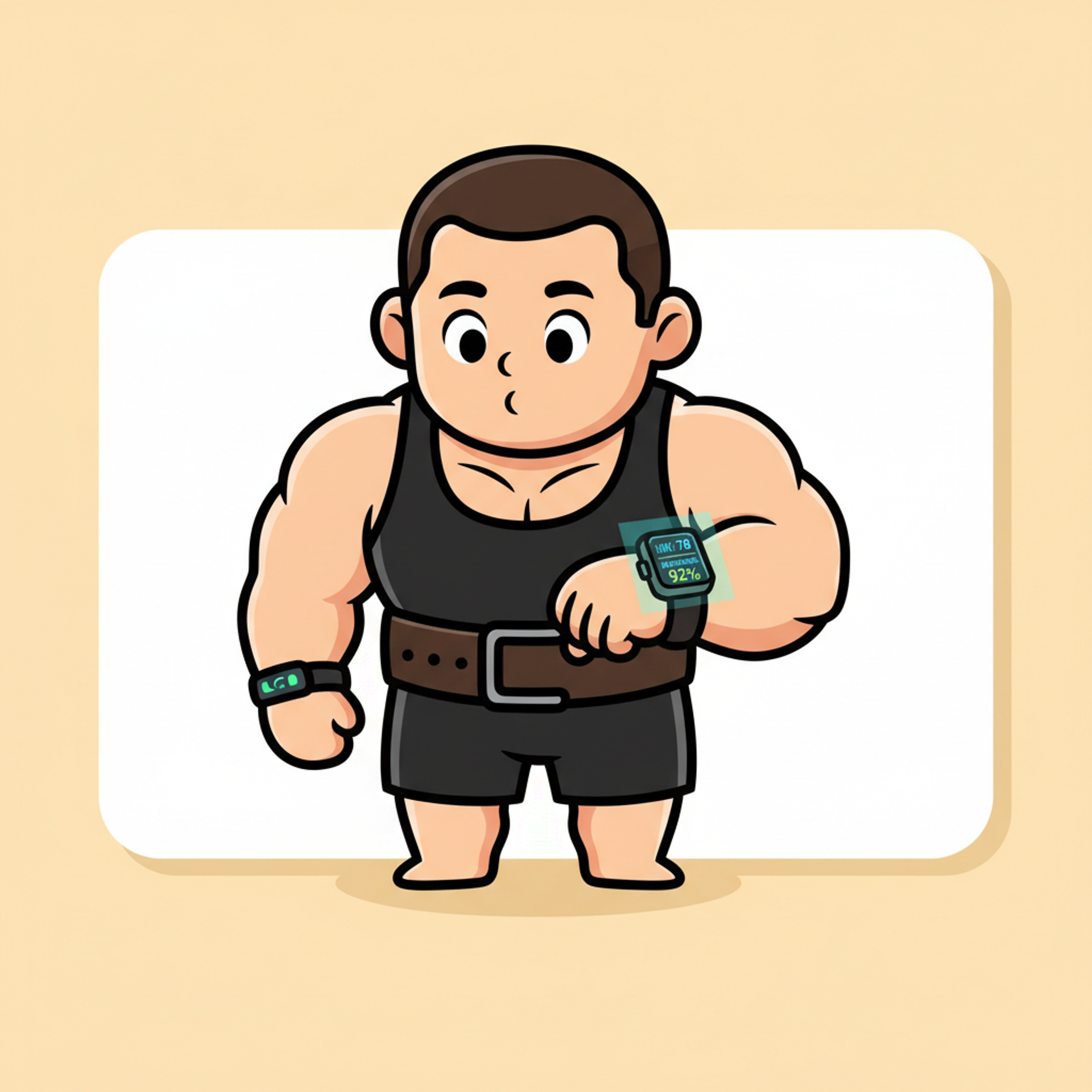
Tracking steps, sleep stages, HRV, and "readiness scores" promises precision. The reality is often paralysis.
A lifter wakes up feeling fine, checks their watch, sees a "30% Recovery" score, and mentally quits before tying their shoes. They have outsourced their body awareness to an algorithm.
Data is valuable—but only if you know how to filter the noise from the signal.
The Metrics That Actually Matter
Most wearable data is vanity stats. A few metrics genuinely correlate with neuromuscular readiness.
1. HRV (Heart Rate Variability)
HRV measures variation in time between heartbeats. It is a proxy for autonomic nervous system balance.
- High HRV: Parasympathetic dominance ("rest and digest"). You are recovered and adaptable.
- Low HRV: Sympathetic dominance ("fight or flight"). You are stressed or under-recovered.
Ignore daily fluctuations. Look for trends. If HRV drops more than 10% below your baseline for three consecutive days, you are systemically fatigued or fighting something. Reduce training volume by about 30% until it returns.
2. Resting Heart Rate (RHR)
RHR is the most reliable indicator of cardiovascular and metabolic stress.
- Acute spike (e.g., +5–10 bpm overnight): Usually alcohol, a late meal, or illness.
- Chronic creep (e.g., +1 bpm every day for two weeks): This is non-functional overreaching. Initiate a deload week before you crash.
3. Sleep Regularity
Total duration matters. Regularity matters more.
Cortisol and melatonin release is time-dependent. Irregular sleep shifts these windows, producing what is effectively social jetlag.
If your wake time varies by more than 60 minutes day-to-day, performance will suffer regardless of total hours slept. Use the data to enforce a consistent sleep window.
The Green/Red Score Problem
Most apps reduce everything to a binary: green (go) or red (stop). This is the wrong way to use the data.
- Red score + good warm-up: You can often still train. The body has reserve tanks. Catecholamines can override fatigue for about an hour.
- Green score + bad warm-up: You can still get hurt. High HRV does not mean your connective tissue is ready for a 1RM attempt.
Practical Application
Scenario: The false positive.
Watch says 95% recovery. You feel sluggish, joints ache.
The watch is measuring cardiac readiness, not neuromuscular or structural readiness. Your heart is fine; your CNS is not.
Protocol: Trust your warm-up. If the bar moves slow at 50%, the watch is wrong. Use RPE and downgrade the session accordingly.
Scenario: The false negative.
Watch says 35% (red zone). You slept poorly but have a scheduled heavy deadlift session.
Skipping the workout entirely is probably the wrong call.
Protocol: Do your standard warm-up. If 50% of your 1RM feels heavy and slow, pivot to accessory work. If it moves fast, ignore the watch—proceed with the session but cap RPE at 8 instead of 9.
Scenario: The trend you should not ignore.
Your resting heart rate has crept from 52 to 58 over three weeks of a hypertrophy block.
This is a clear signal that you are accumulating fatigue faster than you are dissipating it. Schedule a deload now, before your body forces one on you through injury or illness. The data revealed what your motivation was hiding.
Wearables tell you how hard the engine is revving. They do not tell you how fast to drive.
About Rasmus
Powerlifter and coach with more than 7 years in the game.