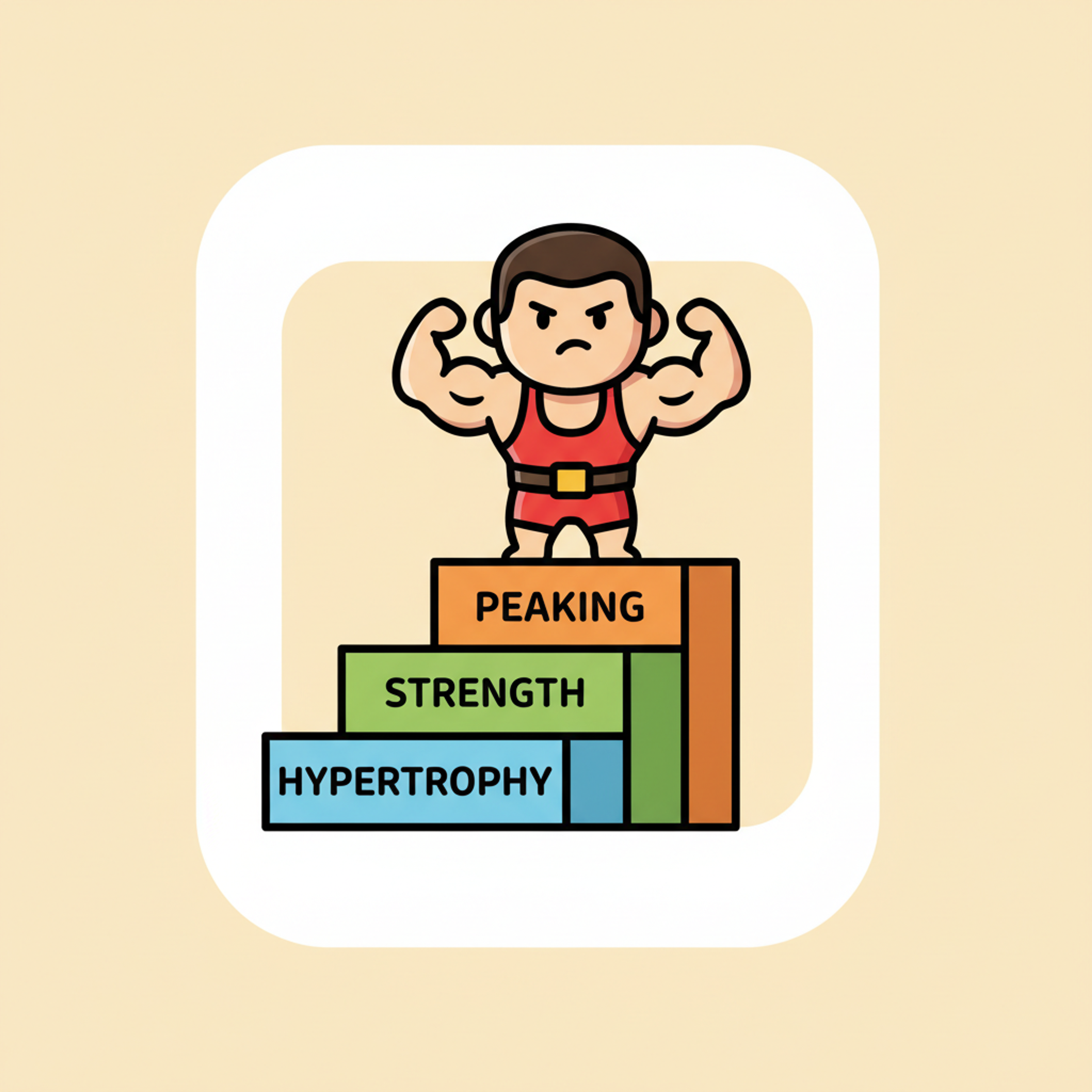
If you try to get bigger, stronger, and faster all at the same time, you will likely end up small, weak, and slow. This is the Interference Effect.
Phase Potentiation is the antidote. It is the strategic sequencing of training blocks so that the gains from one phase serve as the foundation for the next. You are building a pyramid, layer by layer. Each phase creates the biological conditions for the next one to work.
The Three Phases
1. Hypertrophy Phase (The Engine)
- Goal: Increase muscle cross-sectional area (CSA) and work capacity.
- Method:
Volume:* High (MEV to MAV).
Intensity:* Moderate (60–75% 1RM).
Reps:* Higher (8–15).
Selection:* More variation (Group 3 & 2b exercises).
- The Logic: A bigger muscle has more potential for strength. You cannot flex bone. This phase builds the raw material. It also increases your tolerance for volume, allowing you to handle harder training later.
- Potentiation: The added muscle mass feeds the strength phase.
2. Strength Phase (The Transmission)
- Goal: Neurological efficiency. Teach the new muscle to contract forcefully.
- Method:
Volume:* Moderate.
Intensity:* High (75–90% 1RM).
Reps:* Lower (3–6).
Selection:* More specific (Group 1 & 2a exercises).
- The Logic: You have the engine; now you need the transmission to transfer that power. You are recruiting more motor units and improving rate coding—how fast signals are sent to the muscle.
- Potentiation: The improved neural output feeds the peaking phase.
3. Peaking Phase (The Nitro)
- Goal: Express maximal performance (1RM).
- Method:
Volume:* Low (maintains fitness, drops fatigue).
Intensity:* Maximal (90%+).
Reps:* Singles and doubles (1–2).
Selection:* Competition lifts.
- The Logic: Skill refinement. You are stripping away fatigue and practicing the specific act of lifting a maximal weight.
- Potentiation: You cash in the potential built in the previous two phases.
The Conflict: Trying to Do Everything at Once
"Powerbuilding" is a marketing term, not a methodology. Trying to maintain peak leanness, peak hypertrophy, and peak 1RM strength year-round is not realistic for a natural lifter.
- The Conflict: Hypertrophy requires fatigue (metabolic stress). Strength requires freshness (neural drive). You cannot maximize both simultaneously.
- The Reality:
During a hypertrophy block*, your 1RM might temporarily dip. You are tired, and you haven't touched heavy weights in weeks. This is expected.
During a peaking block*, you might look a bit flatter. Less volume means lower glycogen stores. Also expected.
Practical Application
Don't just write "4 sets of 8" forever. Plan your year.
Sample 16-Week Prep:
- Weeks 1–6 (Hypertrophy):
* Focus: High bar squat, stiff leg deadlifts, dumbbell pressing.
* Reps: 8–12.
* Mindset: "Get a pump, get tired."
- Weeks 7–12 (Strength):
* Focus: Competition low bar squat, deadlift, bench press.
* Reps: 3–5.
* Mindset: "Move heavy weight fast."
- Weeks 13–15 (Peaking):
* Focus: Heavy singles.
* Reps: 1–2.
* Mindset: "Practice the sport."
- Week 16: Competition / Test Day.
You can have it all. Just not all at once. Build the base, sharpen the peak, reset.
About Rasmus
Powerlifter and coach with more than 7 years in the game.
Related Articles
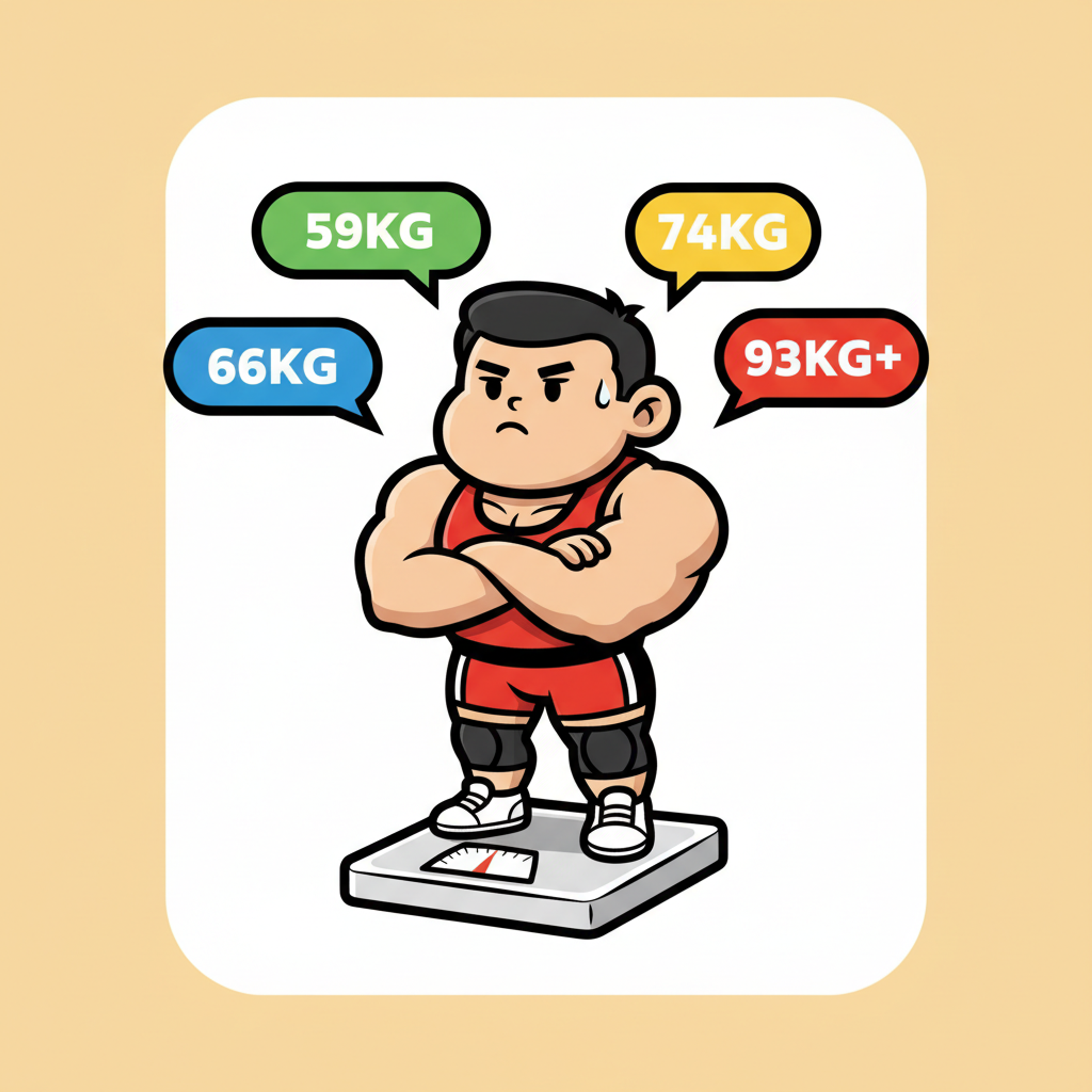
What Weight Class Should You Actually Compete In
Most first-time powerlifters pick a weight class the same way they pick a shirt size: by their current bodyweight. That is the wrong framework.
Should You Do Speed Work
Speed work sounds like it's for athletes. You are a powerlifter. You lift heavy things slowly.
How to Pick Your Opener
Your opener is the most important lift of the meet. Not your third attempt. Not your all-time PR. The first lift.